Dear Professional Colleagues,
“Decisions do not come in shades of grey; they come in black or white. The choice between them is shaped by the courage to decide.”
We are living in an era of unprecedented change, where opportunities and challenges are contesting the foundations of hitherto established systems and practices which are continually being reshaped. Rapid technological advancement, digital transformation, and evolving professional and economic landscapes are changing the way we work, decide, and engage with the world. Yet, amidst this transformation, one principle remains constant: that every responsible decision must be coupled with ethics and integrity.
Our ethos has long placed ethics, duty and righteousness at the heart of individual and collective life since the primordial era. Life, more particularly, the professional life continually places before us myriads of choices—some simple, others complex, and many demanding to choose between what is expedient and what is right. The choices we make, particularly when the path ahead is uncertain, shape not only our future but also our character, our conduct, and the values we uphold. The edifice of professional character lies in the moment of truth: distinguishing mere expediency from what ought to have been accomplished and having the courage to stand by it.
Choosing the right path is not always the easiest choice; it however gives purpose and enduring value to our actions and sustains credibility in our role as gatekeepers of trust. As aptly captured in the words of our Past President CA. R.C. Cooper and stated in the foreword of the 1963 Edition of the Code:
“Ethics is a state of the mind, and there may be some act which, though it may not strictly fall under one of the items of the Schedule, may be one which may not be proper by any moral or ethical standards. In the larger interests of the Institute, the Council exhorts all members to search their hearts and conscience whenever in doubt, and thereby assist towards the maintenance of high principles of professional conduct established by the Council.”
It is in this spirit that leadership finds its deepest foundation—not merely in authority or influence, but in the moral courage to make principled choices. The voice of an ethical leader is, therefore, not simply the voice that commands; it is the voice that has the conviction to stand for what is right, the wisdom to consider the larger good, and the courage to translate values into action. Decisions rooted in ethics may not always offer the easiest or the most immediate path, but they possess the strength to create enduring trust and lasting impact.
As integral constituents of the profession of Chartered Accountancy, our members constantly affirm commitment to uphold core values of integrity, objectivity and ethical conduct in professional tasks rather than merely accomplishing professional responsibility. The true meaning of that commitment is reflected not solely in the decisions made in moments of certainty, but in how persistently we uphold our principles when confronted with pressure, competing interests or difficult choices. Every day beckons a call for judgement, discretion and responsibility, where ethics serves as the bedrock upon which sound professional judgement is built.
Yet, ethics finds its true expression through integrity. Integrity is the alignment between what we believe, what we say, and what we do. It is the consistency that enables our values to remain constant even when circumstances change. It is this consistency of conduct that creates credibility and distinguishes professional excellence from professional responsibility. The ICAI Code of Ethics provides an important framework in this regard, guiding members in navigating the complex situations that arise in professional practice and reinforcing the fundamental principles that underpin the credibility of the profession. The Revised Code of Ethics further reflects the profession’s continuing endeavour to strengthen ethical standards in response to an evolving professional environment.
At the heart of every profession lies an invaluable yet intangible asset, i.e., trust. In the case of Chartered Accountants, the trust reposed by stakeholders carries an even deeper significance because our professional responsibilities often influence financial decisions, business confidence, investment climate and interests of heterogenous stakeholders. Trust is earned gradually, through years of integrity, competence and consistent conduct, yet it can be diminished by a single lapse in judgement. It is, therefore, not only an episodic outcome of professional excellence; it is a responsibility that must be consciously nurtured and protected.
The Chartered Accountant is in a distinctive position — not just as a professional entrusted with numbers and financial information, but as a guardian of trust. Our responsibility extends to safeguarding financial integrity, promoting transparency, strengthening accountability and protecting public confidence. The work of a Chartered Accountant has implications that extend beyond the immediate assignment or engagement. It contributes to the confidence with which stakeholders make decisions and, in turn, the credibility of the wider economic and financial ecosystem.
This responsibility assumes even greater significance in an age defined by rapid technological and economic transformation. Artificial Intelligence, automation, digitalisation and increasingly complex financial ecosystems are reshaping professional practices at an unprecedented pace. Technology can enhance the speed, scale and sophistication of decision-making, but it cannot, by itself, determine what ought to be done. As the power of technology expands, the wisdom with which that power is exercised must advance alongside it. The Chartered Accountant of the future must therefore be not only technologically equipped, but also ethically anchored, capable of exercising professional judgement with independence, discernment and commitment to the larger public interest.
Integrity cannot flourish through individual effort alone; it must become part of the culture of every institution, organisation and professional community. We must strive to create environments where ethical conduct is encouraged, transparency is valued, and accountability is embraced.
Let’s look at the key developments since our last communication through the September issue of the CA Journal:
IFAC Board Meeting
As India assumes a larger role at the global stage, ICAI is increasingly positioning itself as a strategic voice in the global accountancy profession. The successful hosting of the IFAC Board Meeting and related meetings in New Delhi from 31st August to 3rd September 2026 provided an important platform for ICAI to engage with the global accountancy leadership and contribute to discussions shaping its future. The address by Shri Piyush Goyal, Hon’ble Union Minister of Commerce and Industry, and Dr. Pallavi Jain Govil, Secretary, Ministry of Corporate Affairs, at the IFAC Board Meeting, reinforced the importance of the accountancy profession in India’s economic and regulatory landscape.
As part of the stakeholder engagement, myself, Vice President and Secretary, ICAI along with Mr. Jean Bouquot, President, IFAC, Ms. Taryn Rulton, Deputy President, IFAC, and Mr. Lee White, Chief Executive Officer, IFAC had called on the Comptroller and Auditor General of India. Deliberations thereat connected the global profession with India’s institutional framework for governance and public accountability. These engagements strengthen ICAI’s global partnerships and more importantly enable it to contribute to international standards-setting process, given the special and differential status of SMEs & SMPs in national economy, share India’s professional experience and help shape a globally relevant, future-ready accountancy profession both domestically and internationally.
Signing of Extension Agreement between ICAI and ICA Nepal
With a shared commitment to strengthening the accountancy profession in Nepal and advancing institutional cooperation, ICAI and the Institute of Chartered Accountants of Nepal (ICA Nepal) renewed their partnership for another five years. A delegation led by CA. Ananda Raj Sharma Wagle, President, ICA Nepal, visited ICAI on 28th–29th September, 2026, for knowledge exchange across areas of professional education, examinations, training, regulation, digital transformation and AI, professional development, and member services.
During the visit, the two Institutes signed an Extension Agreement on 29th September, 2026, renewing the MRA signed in 2020. The renewed partnership reinforces ICAI’s role as a trusted partner in strengthening professional capacity, sharing institutional expertise and shaping the future of the accountancy profession in the region.
Advancing Professional Capacity Building with MIPA
With the objective of supporting capacity building and advancing the accountancy profession in Africa, ICAI is deepening its cooperation with the Mauritius Institute of Professional Accountants (MIPA). Dr. Bhavish Jugurnath, CEO, MIPA, visited ICAI on 29th September, 2026, to explore areas of collaboration. MIPA sought ICAI’s support as a Knowledge Partner for its AI Innovation Summit 2026 and technical assistance in strengthening its professional curriculum framework. ICAI assured full cooperation, with the proposed MoU between both Institutes expected to receive Government of India approval shortly.
ICAI International Conference – Toronto and Sydney
As part of ICAI’s strategy to strengthen global development, recognition and branding of the profession, two ICAI International Conferences were successfully held in key regions.
The ICAI International Conference – Canada, hosted by the ICAI Toronto Chapter, was held on 13th September, 2026, and attended by CA. Charanjot Singh Nanda, Immediate Past President, and the ICAI International Conference – Oceania, hosted by the ICAI Sydney Chapter, was held on 25th September, 2026, and attended by CA. Mangesh Kinare, Vice President, ICAI, along with Central Council Members, ICAI. This conference was also graced by Ms. Taryn Rulton, Deputy President, IFAC. The Conferences provided platforms for global professional engagement, knowledge exchange and strengthening ICAI’s international presence.
Further, during the Australia visit, discussions with the Australian Securities and Investments Commission (ASIC) also explored regulatory cooperation and the possibility of reducing or waiving the 12-month local experience requirement for ICAI members exploring audit rights/to register as a Company Auditor in Australia.
ICAI signs MoU with IIM Lucknow - Strengthening Management and Leadership Capabilities
To further augment and harness the role of Chartered Accountants as strategic business leaders, ICAI has entered into an MoU with IIM Lucknow to provide customised training to Chartered Accountants enrolled in the Diploma in Management and Business Finance (DMBF) program offered by the Internal Audit Standards Board of ICAI. The said collaboration shall trigger a symbiotic outcome given the integration of extant professional expertise amongst CAs with management skills to strengthen the capabilities that today’s business environment demands. Through this initiative, CAs undertaking the program will have deeper exposure to strategic thinking, leadership, decision-making and business finance, enabling them to move beyond hitherto conventional roles and contribute more effectively as trusted business and strategic advisors to the community at large.
MSME Strategic Stakeholders Meet, 2026
India’s journey towards a stronger and more inclusive economy depends significantly on the strength of MSMEs and startups. Recognising this, ICAI is working to bring the profession closer to the MSME ecosystem, not only to understand its challenges but also to help create practical solutions. The MSME Strategic Stakeholders Meet, 2026, brought together around 65 senior representatives from the Ministry of MSME, regulators, financial institutions, public sector organisations, industry bodies and other ecosystem partners to deliberate on issues ranging from access to credit, liquidity, digitalisation, skills and rural enterprise development as well as compliance. Additionally, ICAI’s recognition by the World Book of Records, Asia Book of Records and India Book of Records for mentoring 21,748 MSMEs in a single day reflects the scale of this engagement.
As MSMEs seek to formalise operations, access finance, adopt technology, manage risk and expand into new markets, Chartered Accountants can increasingly serve as trusted partners in their growth journey. ICAI’s continued engagement with the sector can therefore create a meaningful bridge between MSME aspirations and professional expertise, enabling our members to contribute more to enterprise creation, employment and India’s broader economic ambitions.
Advancing Sustainability Reporting and Assurance
Continuing its pivotal role in strengthening India’s sustainability reporting and assurance ecosystem, ICAI is helping the profession to align and respond to the growing expectations of investors, businesses, and other stakeholders. The issuance of SSA 5000: General Requirements for Sustainability Assurance Engagements, along with the Framework for Sustainability Assurance Engagements, aligned with the IAASB’s ISSA 5000, marks a significant milestone in the journey. Applicable to sustainability assurance engagements for financial years beginning on or after 1st April 2027, SSA 5000 will provide a comprehensive, principle-based framework that brings greater consistency, rigour and confidence to sustainability assurance in India. Complementing this, ICAI has issued the Sustainability Reporting Maturity Model (SRMM) 3.1 for Manufacturing and 3.2 for Services, which will provide entities with a structured approach to assess their sustainability practices, identify gaps, and plan a pathway for improvement. These initiatives reflect ICAI’s larger purpose - to help build an ecosystem where sustainability information is not only reported but is trusted, understood and translated into meaningful action.
Strengthening Global Partnerships through Knowledge
As India strengthens its engagement with the global economy, ICAI is also expanding its role as a knowledge and capacity-building partner for the international professional community. In collaboration with the Ministry of External Affairs, Government of India, the Global Trade & Services Committee of ICAI conducted the 4th and 5th ITEC Training Programmes in August and September 2026 at the ICAI Centre of Excellence, Hyderabad. These programmes brought professionals from 47 ITEC partner countries to India for immersive learning in digital transformation, emerging technologies, global accounting and auditing practices, international standards and the evolving needs of the profession. Such engagements reflect ICAI’s growing contribution to India’s vision of a globally connected, knowledge-driven economy, while demonstrating how the Indian accountancy profession can share expertise, build capabilities and contribute to professional development beyond borders.
Convocation – September, 2026
The Convocation ceremony, marking the completion of a rigorous professional regimen and now the beginning of a lifelong commitment to the core values which the Chartered Accountancy profession embodies, is a moment of immense pride for the fresh entrants to the profession. The recent ICAI Convocation held across 23 locations welcomed 8,964 newly qualified CAs to the professional fraternity. The Chief Guest, Shri Arjun Ram Meghwal, Hon’ble Union Minister of State (Independent Charge) for Law and Justice, iterated, “CAs are custodians of trust and that ICAI stands for I – Integrity, C – Confidence, A – Accountability and I – India First.” These words carry a special significance for those beginning their careers, as a CA credential is not simply a qualification; it is a responsibility evincing professional competence and service to society at large, ingrained with ethical conduct and integrity. Guided by these values, the professionals shall become architects of growth for the profession and contribute to Viksit Bharat 2047.
I urge our young members to remain curious, embrace continuous learning, think beyond conventional boundaries and never compromise on ethics. Your qualification opens the door, but your character, competence and contribution will define the journey ahead.
Conclusion
The maxim “Right will always remain right, even when everyone insists it is wrong. Truth does not change with opinions, and integrity does not depend on approval” eloquently applies in whatever our esteemed professional members undertake. The responsibility entrusted to us is enormous, as each of our authentication carries with it the weight of professional accountability and the confidence that the nation, businesses and society have on the Chartered Accountancy profession.
As India advances towards the vision of a Viksit Bharat, every institution and every professional has a role to play in building an ecosystem founded on trust, responsibility and ethical conduct. I call upon our member fraternity to remain vigilant, question when something does not appear right, seek clarity when doubt arises and never allow convenience to overshadow conscience.
Let us, therefore, continue to uphold the highest standards guided by ethics, not because we are being watched, but because it is who we are as professionals. Let our conduct inspire confidence, our decisions reflect courage, and our profession remain steadfast in its commitment to the larger public interest.
We are living in an era of unprecedented change, where opportunities and challenges are contesting the foundations of hitherto established systems and practices which are continually being reshaped. Rapid technological advancement, digital transformation, and evolving professional and economic landscapes are changing the way we work, decide, and engage with the world.
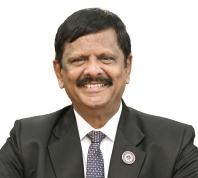
CA. Prasanna Kumar D
President, ICAI
New Delhi, 30th October, 2026